 Onroad
 Offroad
 Kits
Kits
 Electric
 Ready To Race (RTR)
 Nitro
Nitro
 Drift
Drift
 Rock Crawler
 Offroad
 Pickup
 Buggy
Buggy
 Monster
 Sailing
 Jet
Jet
 RTR
RTR
 Electric
 High Speed
 Individual Cars
 Sets
Sets
 Locomotive & Carriages
 Spare Tracks
 Sets
Sets
 Kits
Kits
On Sale

$0.00

 ACADEMY
 AIRFIX
 ALBION METALS
 APC
APC
 ARRMA
ARRMA
 ARTESANIA
 AXIAL
AXIAL
 BALSA
BALSA
 BBURAGO
 BLACKZON
 BLADE
BLADE
 BOB SMITH
 BOLLY
BOLLY
 CASTLE CREATIONS
 DELUXE MATERIALS
 DRAGON
 DUALSKY
 DUBRO
DUBRO
 DUMAS
DUMAS
 EASY MODEL
 ECX
ECX
 E-FLITE
 ESTES
ESTES
 EVERGREEN
 EXCEL
EXCEL
 FIRELANDS
 FLYSKY
 FORCEENGINES
 FTX
FTX
 FUNTEK
 FMS RC
 GALAXY
 GEMFAN
 GEN2 BATTERIES
 GENS ACE
 GFORCE
 GREAT PLANES
 GT POWER
 GUILLOWS
 HAIBOXING
 HASEGAWA
 HIMARK
 HITEC
HITEC
 HOBAO
HOBAO
 HOBBYTECH
 HOBBYWING
 HOBBYZONE
HOBBY-TAIWAN
HOBBYZONE
HOBBY-TAIWAN
 HORNBY
 HPI RACING
 HUDY
HUDY
 HUMBROL
 iM RC
iM RC
 INTELLECT
 ITALERI
 JCONCEPTS
 K&S
K&S
 KIMBROUGH
 KINETIC MODELS
 KYOSHO
 LINDBERG
 LOSI
LOSI
 LOUISE WORLD
 MAGIC MODEL
 MAVERICK
 MILLIPUT
 MUCH MORE RACING
 MULTIPLEX
 MYLAPS
MJX
MYLAPS
MJX
 NOVAROSSI
 NVISION
 NXE BATTERIES
 OS ENGINES
 PANDA HOBBY
 PARKZONE
 PECO
PECO
 PRO BOAT
 PROFILM
 PROLINE
 PROTOFORM
QUEST
PROTOFORM
QUEST
 RC 4WD
 REEDY
REEDY
 REVELL
 RIVER HOBBY VRX
 ROAPEX
 ROBINSON_RACING
 RW
RW
 SAVOX
SAVOX
 SCALEXTRIC
 SCHELLE
 SKYRC
SKYRC
 SOLARFILM
 SPAZSTIX PAINT
 SPEKTRUM
 TAMIYA
 TATTU
TATTU
 TEAM ASSOCIATED
 TEAM CORALLY
 TEAM MAGIC
 TEAM ORION
 TLR
TLR
 TORNADO RC
 TRAXXAS RC ACCESSORIES
 TRUMPETER
Toolkit Chargers
VISION
TRUMPETER
Toolkit Chargers
VISION
 VOLANTEX RC
WINGSLAND
VOLANTEX RC
WINGSLAND
 XRAY
XRAY
 ZAP
ZAP
 ZVEZDA
 Schumacher
Tomix
Schumacher
Tomix
$0.00
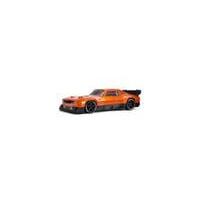
$1,150.00 $1,103.99
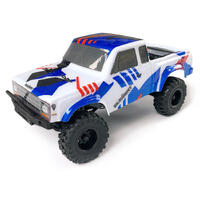
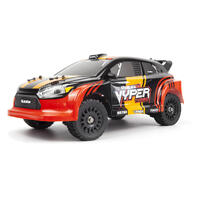
$246.75 $236.89
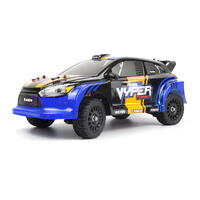
$246.75 $236.89
![Hpi Sport 3 Drift Vgjr Fun Haver Ford Mustang V2 1/10 4Wd Electric Rc Car [120094]](/assets/thumb/HPI-120094.jpg?20260820143314)
$474.68 $455.70
![Hpi 1/10 4Wd Rs4 Sport 3 Drift Dai Yoshihara Subaru Brz Rtr [120096]](/assets/thumb/HPI-120096.jpg?20260807065918)
$444.95 $427.15
![Hpi Rs4 Sport 3 Flux Ford Gt Lm Spec Ii 1/10 4Wd Electric Car [120098]](/assets/thumb/HPI-120098.jpg?20260810093212)
$544.05 $522.29
![Hpi 1/10 Rs4 Sport 3 1969 Ford Mustang Rtr-X [120102]](/assets/thumb/HPI-120102.jpg?20260823210343)
A: RTR means the car comes fully assembled with motor, ESC, and radio system already installed, no building or electronics setup required. Most RTR models still need a battery and charger (sometimes included, sometimes sold separately, check the individual listing) and typically need the body/wing screwed on and wheels checked for tightness before the first run. It's "ready to run," not always "ready to open and drive."
A: RTR includes the electronics (motor, ESC, radio) pre-installed and ready to go. "Almost Ready" (ARR/ARF, "Accs required") means the car or kit is mostly built but still needs you to source and fit additional components, commonly a battery, charger, or sometimes the radio system, before it'll run. If you want zero extra purchases beyond a battery, check the listing specifies full RTR rather than ARR.
Brushed motors are simpler, cheaper to replace, and deliver more predictable, controllable power, a sensible starting point if you're new to RC. Brushless motors are faster, more efficient, and need less maintenance long-term, but the extra power can be harder to control for a first-time driver, especially in tighter spaces.
A: Electric RTR cars run on rechargeable batteries, are quieter, and need no fuel mixing, easier for casual or indoor-adjacent use. Nitro cars run on fuel, need tuning, glow plugs, and ongoing maintenance, but generally offer longer run times per fill and a different driving feel favoured by more experienced hobbyists. If you want to get moving fast with minimal upkeep, electric is the simpler path.
A: It reflects what the tyres, suspension, and ground clearance are tuned for, not a hard rule. An on-road car has low ground clearance and slick or semi-slick tyres built for grip on smooth surfaces, take it onto grass or gravel and you'll likely damage the drivetrain or suspension quickly. Off-road models have higher clearance and knobbed tyres for rougher terrain but won't corner as sharply on pavement.
A: Touring cars are built for speed and precise handling on flat surfaces, closest to real circuit racing. Buggies handle rougher terrain with more suspension travel, suited to dirt and jumps. Crawlers prioritise low-speed torque and extreme articulation for climbing obstacles rather than outright speed. Picking the wrong type for your intended terrain is the most common first-buyer mistake in RTR cars.
$0.00
Truck,Paint,Type
(1)
Truck,Paint
(1)
Truck,Monster Truck,Type
(1)
Truck,Monster Truck
(1)
Truck
(19)
Touring Car,Type,Touring
(1)
Touring Car,Truck,Type
(1)
Touring Car,Truck
(1)
Touring Car,Touring
(1)
Touring Car
(144)
Touring
(36)
Short Course Truck
(4)
Semi Truck
(3)
Monster Truck
(12)
Model Kit
(1)
Crawler
(27)
Buggy
(24)
Arrma
(8)
Cars
(8)
Axial
(1)
Trucks
(1)
Drift
(3)
4WD
(2)
Electric
(1)
Hardware
(1)
Washers, Spacers & O-Rings
(1)
Hobbytech
(3)
Cars
(3)
Hpi Racing
(19)
Cars
(18)
Parts
(1)
Kits
(3)
Kyosho
(3)
MJX
(12)
Cars
(12)
RC Racing
(1)
Racer Car Kits - Offroad
(1)
Tamiya
(3)
Cars
(2)
Parts
(1)
Team Associated
(22)
Buggy
(1)
Cars
(15)
Parts
(1)
Trucks
(5)
Traxxas
(117)
Accessories
(42)
Batteries
(4)
Buggy
(2)
Cars
(46)
Monster Trucks
(9)
Trucks
(14)

![Hpi 1/10 Rs4 Sport 3 1987 Warsteiner Bmw E30 Touring Car [120103]](/assets/thumb/HPI-120103.jpg?20260904062857)