

 Onroad
 Offroad
 Kits
Kits
 Electric
 Ready To Race (RTR)
 Nitro
Nitro
 Drift
Drift
 Rock Crawler
 Offroad
 Pickup
 Buggy
Buggy
 Monster
 Sailing
 Jet
Jet
 RTR
RTR
 Electric
 High Speed
 Individual Cars
 Sets
Sets
 Locomotive & Carriages
 Spare Tracks
 Sets
Sets
 Kits
Kits
 ACADEMY
 AIRFIX
 ALBION METALS
 APC
APC
 ARRMA
ARRMA
 ARTESANIA
 AXIAL
AXIAL
 BALSA
BALSA
 BBURAGO
 BLACKZON
 BLADE
BLADE
 BOB SMITH
 BOLLY
BOLLY
 CASTLE CREATIONS
 DELUXE MATERIALS
 DRAGON
 DUALSKY
 DUBRO
DUBRO
 DUMAS
DUMAS
 EASY MODEL
 ECX
ECX
 E-FLITE
 ESTES
ESTES
 EVERGREEN
 EXCEL
EXCEL
 FIRELANDS
 FLYSKY
 FORCEENGINES
 FTX
FTX
 FUNTEK
 FMS RC
 GALAXY
 GEMFAN
 GEN2 BATTERIES
 GENS ACE
 GFORCE
 GREAT PLANES
 GT POWER
 GUILLOWS
 HAIBOXING
 HASEGAWA
 HIMARK
 HITEC
HITEC
 HOBAO
HOBAO
 HOBBYTECH
 HOBBYWING
 HOBBYZONE
 HORNBY
 HPI RACING
 HUDY
HUDY
 HUMBROL
 iM RC
iM RC
 INTELLECT
 ITALERI
 JCONCEPTS
 K&S
K&S
 KIMBROUGH
 KINETIC MODELS
 KYOSHO
 LINDBERG
 LOSI
LOSI
 LOUISE WORLD
 MAGIC MODEL
 MAVERICK
 MILLIPUT
 MUCH MORE RACING
 MULTIPLEX
 MYLAPS
 NOVAROSSI
 NVISION
 NXE BATTERIES
 OS ENGINES
 PANDA HOBBY
 PARKZONE
 PECO
PECO
 PRO BOAT
 PROFILM
 PROLINE
 PROTOFORM
 RC 4WD
 REEDY
REEDY
 REVELL
 RIVER HOBBY VRX
 ROAPEX
 ROBINSON_RACING
 RW
RW
 SAVOX
SAVOX
 SCALEXTRIC
 SCHELLE
 SKYRC
SKYRC
 SOLARFILM
 SPAZSTIX PAINT
 SPEKTRUM
 TAMIYA
 TATTU
TATTU
 TEAM ASSOCIATED
 TEAM CORALLY
 TEAM MAGIC
 TEAM ORION
 TLR
TLR
 TORNADO RC
 TRAXXAS RC ACCESSORIES
 TRUMPETER
 VOLANTEX RC
 XRAY
XRAY
 ZAP
ZAP
 ZVEZDA
 Schumacher

Parts Finder
Select Vehicle
RC Car Differential Oils
Show Filters
Show Filters
170 Products Found

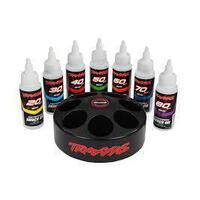
On Sale
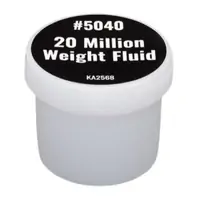

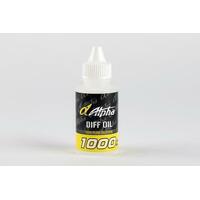
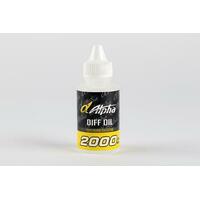
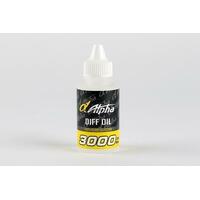
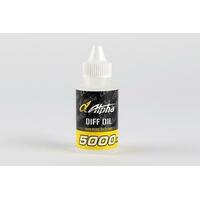
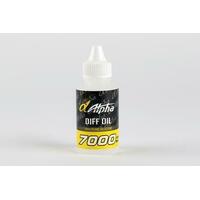
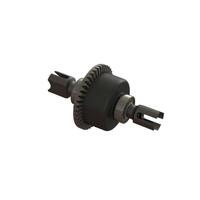
On Sale
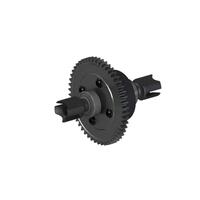
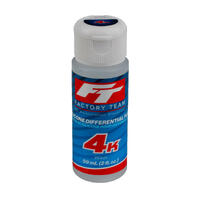
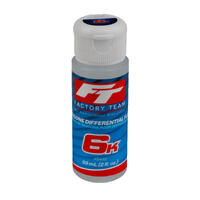
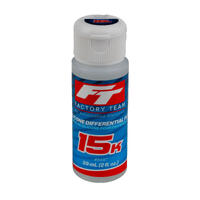
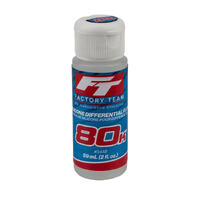
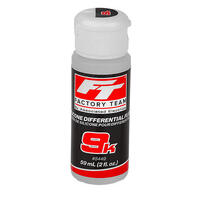

Shop RC differential oils in a wide range of viscosities for fine-tuning the handling and performance of your radio-controlled car, truck, buggy or racing model. Differential oil is used in gear differentials to control how freely the internal gears allow the wheels to rotate at different speeds.
Choosing the correct differential oil is an important part of RC setup. Different oil viscosities can significantly change the vehicle's acceleration, cornering behaviour, traction and overall handling characteristics.
What Does Differential Oil Do?
An RC gear differential allows the left and right wheels to rotate at different speeds when the vehicle turns. This is important because the outside wheel travels further than the inside wheel during a corner.
Differential oil controls the amount of resistance inside the differential.
Thinner oil:
Allows the differential to operate more freely, providing greater difference in wheel speed.
Thicker oil:
Creates more resistance and causes the differential to act more like a locked or limited-slip differential.
Changing the differential oil viscosity is one of the most effective ways to tune the handling of an RC vehicle.
Differential Oil Viscosity
RC differential oils are available in a very wide range of viscosities, commonly measured in cSt (centistokes).
Common viscosities include:
- 100 cSt
- 200 cSt
- 300 cSt
- 500 cSt
- 700 cSt
- 1,000 cSt
- 2,000 cSt
- 3,000 cSt
- 5,000 cSt
- 7,000 cSt
- 10,000 cSt
- 20,000 cSt
- 30,000 cSt
- 50,000 cSt
- 100,000 cSt and higher
The exact viscosity range available will depend on the manufacturer and intended application.
How Differential Oil Changes Handling
The effect of differential oil depends on whether it is being used in the front, centre or rear differential and on the type of vehicle.
Front Differential
Thicker oil can provide increased front-end drive and affect steering and corner entry behaviour. Thinner oil allows the front differential to operate more freely.
Centre Differential
Centre differential oil is particularly important on 4WD and AWD vehicles. Thicker oil can transfer more power between the front and rear axles, while thinner oil allows more differential action.
Rear Differential
Rear differential oil affects rear traction and cornering characteristics. Thicker oil can increase rear drive and stability, while thinner oil allows greater differential action.
The ideal setup varies significantly between vehicles and driving conditions, so it is recommended to start with the manufacturer's suggested oil and adjust from there.
Differential Oil for RC Racing
Differential oil is an essential tuning tool for RC racers. By changing the viscosity in the front, centre and rear differentials, drivers can fine-tune the balance of the vehicle to suit:
- Track surface
- Track layout
- Grip level
- Tyres
- Weather conditions
- Driving style
- Vehicle setup
- Motor and battery power
A different oil setup may be required for high-grip carpet compared with low-grip dirt, clay or outdoor surfaces.
Silicone Differential Oil
Many RC gear differentials use silicone-based differential oil because it provides consistent damping characteristics over a wide range of temperatures and operating conditions.
Silicone differential oil is available in a range of viscosities, allowing precise tuning of differential action.
Always use differential oil recommended by the vehicle or differential manufacturer.
Differential Maintenance
Differential oil should be checked and replaced periodically, particularly on vehicles that are raced or used frequently.
When servicing a differential:
- Remove the differential according to the vehicle manufacturer's instructions.
- Disassemble and clean the differential components.
- Inspect the gears, pins, seals and bearings for wear or damage.
- Replace worn or damaged components.
- Reassemble the differential correctly.
- Fill with the recommended differential oil.
- Ensure the oil is distributed evenly through the gears.
- Check the differential for smooth operation before reinstalling.
Avoid overfilling the differential. Follow the manufacturer's recommended fill level and assembly procedure.
Read More


