

 Onroad
 Offroad
 Kits
Kits
 Electric
 Ready To Race (RTR)
 Nitro
Nitro
 Drift
Drift
 Rock Crawler
 Offroad
 Pickup
 Buggy
Buggy
 Monster
 Sailing
 Jet
Jet
 RTR
RTR
 Electric
 High Speed
 Individual Cars
 Sets
Sets
 Locomotive & Carriages
 Spare Tracks
 Sets
Sets
 Kits
Kits
 ACADEMY
 AIRFIX
 ALBION METALS
 APC
APC
 ARRMA
ARRMA
 ARTESANIA
 AXIAL
AXIAL
 BALSA
BALSA
 BBURAGO
 BLACKZON
 BLADE
BLADE
 BOB SMITH
 BOLLY
BOLLY
 CASTLE CREATIONS
 DELUXE MATERIALS
 DRAGON
 DUALSKY
 DUBRO
DUBRO
 DUMAS
DUMAS
 EASY MODEL
 ECX
ECX
 E-FLITE
 ESTES
ESTES
 EVERGREEN
 EXCEL
EXCEL
 FIRELANDS
 FLYSKY
 FORCEENGINES
 FTX
FTX
 FUNTEK
 FMS RC
 GALAXY
 GEMFAN
 GEN2 BATTERIES
 GENS ACE
 GFORCE
 GREAT PLANES
 GT POWER
 GUILLOWS
 HAIBOXING
 HASEGAWA
 HIMARK
 HITEC
HITEC
 HOBAO
HOBAO
 HOBBYTECH
 HOBBYWING
 HOBBYZONE
 HORNBY
 HPI RACING
 HUDY
HUDY
 HUMBROL
 iM RC
iM RC
 INTELLECT
 ITALERI
 JCONCEPTS
 K&S
K&S
 KIMBROUGH
 KINETIC MODELS
 KYOSHO
 LINDBERG
 LOSI
LOSI
 LOUISE WORLD
 MAGIC MODEL
 MAVERICK
 MILLIPUT
 MUCH MORE RACING
 MULTIPLEX
 MYLAPS
 NOVAROSSI
 NVISION
 NXE BATTERIES
 OS ENGINES
 PANDA HOBBY
 PARKZONE
 PECO
PECO
 PRO BOAT
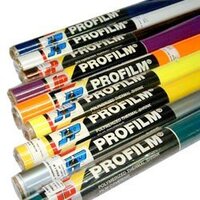 PROFILM
 PROLINE
 PROTOFORM
 RC 4WD
 REEDY
REEDY
 REVELL
 RIVER HOBBY VRX
 ROAPEX
 ROBINSON_RACING
 RW
RW
 SAVOX
SAVOX
 SCALEXTRIC
 SCHELLE
 SKYRC
SKYRC
 SOLARFILM
 SPAZSTIX PAINT
 SPEKTRUM
 TAMIYA
 TATTU
TATTU
 TEAM ASSOCIATED
 TEAM CORALLY
 TEAM MAGIC
 TEAM ORION
 TLR
TLR
 TORNADO RC
 TRAXXAS RC ACCESSORIES
 TRUMPETER
 VOLANTEX RC
 XRAY
XRAY
 ZAP
ZAP
 ZVEZDA
 Schumacher
How to Choose Your First RC Car: A Beginner’s Guide
Date Posted:14 September 2026
Buying your first radio-controlled car is exciting, but with so many different sizes, styles and power systems available, choosing the right one can feel confusing.
Should you buy a monster truck, buggy, crawler or on-road car? Is brushed or brushless better? What does Ready-to-Run actually include?
This beginner’s guide explains the most important things to consider when selecting your first hobby-grade RC car.
Start With Where You Will Drive
Before comparing speed or motor power, think about where you will use your RC car most often. The available driving area will help determine which vehicle is best for you.
Backyard, Grass and General Off-Road Driving
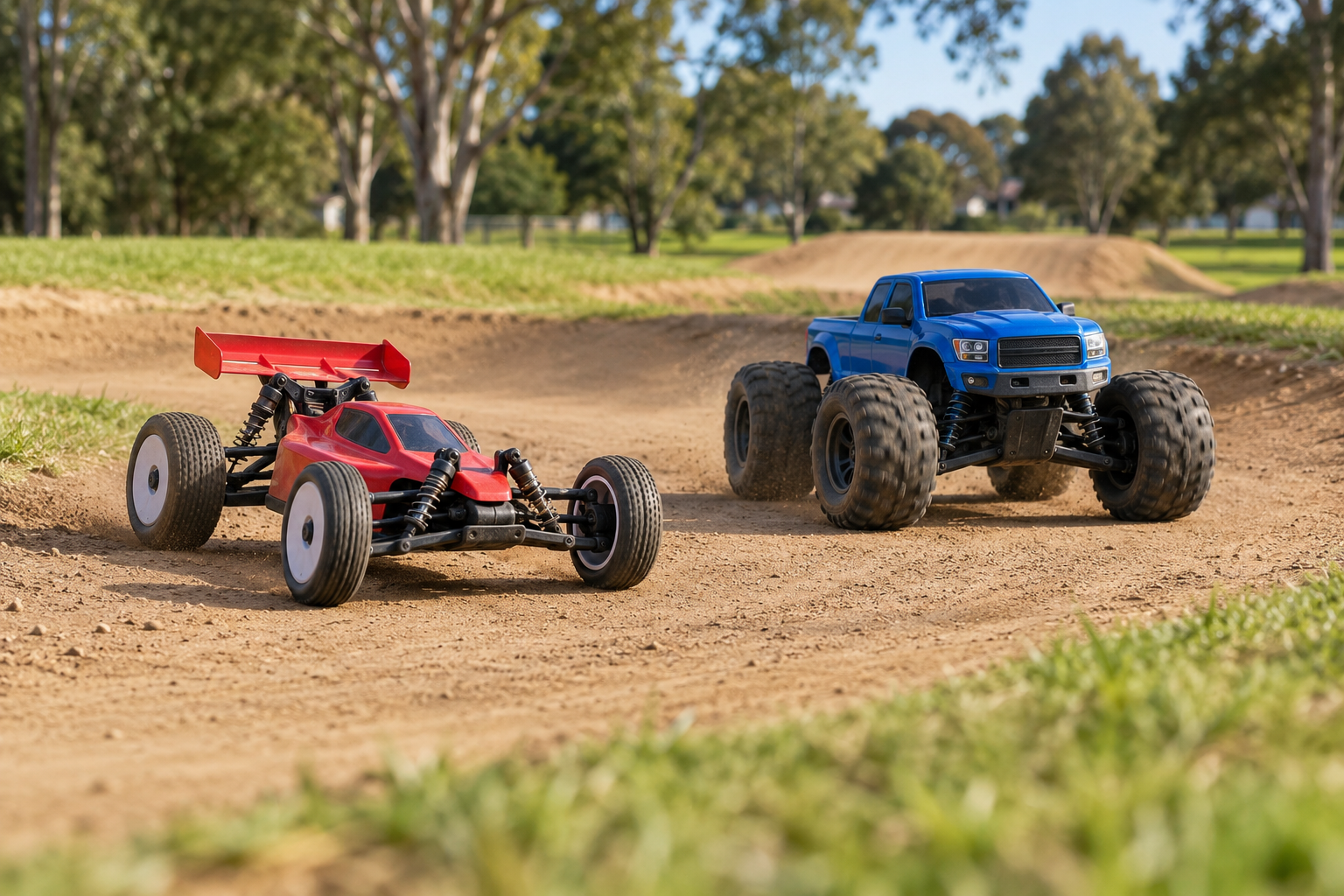
A monster truck, stadium truck or off-road buggy is usually the best choice for general backyard and park use.
Monster trucks have large tyres and good ground clearance, allowing them to travel over grass, loose dirt and uneven surfaces. Buggies are generally lower and more agile, making them excellent for dirt tracks and smoother off-road areas.
Roads and Smooth Car Parks
An on-road touring car or rally car is designed for smoother surfaces such as sealed roads, driveways and car parks.
These cars provide accurate handling and higher cornering speeds, but their lower ground clearance makes them less suitable for grass or rough terrain.
Always choose a safe location away from traffic, pedestrians and parked vehicles.
Indoor Driving and Small Areas
Smaller 1/18, 1/24 and 1/28 scale vehicles can be excellent for indoor use, smaller yards or compact driving areas.
They are easier to store and transport, although their smaller wheels can struggle on thick grass and rough surfaces.
Bush Trails and Rock Crawling
An RC crawler is designed for slower, technical driving over rocks, trails and obstacles.
Crawlers focus on control, torque and realistic off-road performance rather than maximum speed. They are a great choice for someone who enjoys exploring and carefully navigating difficult terrain.
Choose the Right Type of RC Car
Each style of RC car offers a different driving experience.
Monster Trucks
Monster trucks are one of the most popular choices for beginners. Their large tyres, high ground clearance and durable construction make them suitable for a wide variety of surfaces.
They are a good all-round option for backyard driving, dirt, short grass and general recreational use.
Off-Road Buggies
Buggies are lighter, lower and more responsive than monster trucks. They are designed for speed and handling on dirt tracks and relatively smooth off-road surfaces.
A buggy is an excellent choice if you may eventually want to visit an RC racing track.
Stadium and Short Course Trucks
Stadium trucks combine buggy-style handling with larger tyres and increased ground clearance.
Short course trucks have enclosed wheels and realistic truck bodies. Their covered wheels can provide some protection during close racing and minor contact.
On-Road and Drift Cars
On-road RC cars are designed for speed and precise handling on smooth surfaces.
Drift cars use specialised tyres and chassis setups that allow the car to slide through corners. They can be a lot of fun, but require a suitable smooth driving area.
Rock Crawlers
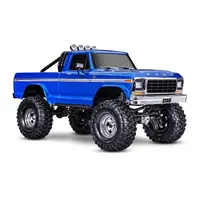
Rock crawlers are slower than most other RC vehicles, but offer excellent low-speed control and climbing ability.
They are ideal for trails, rocks, garden courses and anyone who enjoys realistic scale driving.
What RC Scale Should You Choose?
The scale describes the approximate size of the RC vehicle compared with a full-size vehicle.
1/10 Scale
The most common hobby-grade size is 1/10 scale. These vehicles are large enough to handle outdoor terrain while remaining reasonably easy to transport and store.
They also have excellent parts and accessory support, making 1/10 scale a strong choice for a first RC car.
1/8 Scale
A 1/8 scale RC car is larger, heavier and often more powerful than a 1/10 scale vehicle.
These models can handle rougher terrain, but generally require more space, larger batteries and a higher overall budget.
1/16 and 1/18 Scale
These smaller vehicles are affordable, portable and suitable for smaller areas.
They can still deliver impressive performance, but may not handle long grass or very rough ground as easily as a larger vehicle.
1/24 Scale and Smaller
Mini and micro RC cars are ideal for indoor driving, desktop courses and compact crawling areas.
Their smaller size also makes them easy to take on holidays or store when space is limited.
Ready-to-Run, Kit or Roller?
RC cars are available in several different completion levels.
Ready-to-Run – RTR
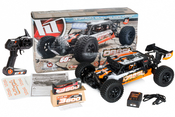
A Ready-to-Run model is normally fully assembled and includes the motor, electronic speed controller, steering servo, receiver and transmitter.
However, not every RTR package includes the main battery, charger or transmitter batteries. Always check the product’s “What You Need” or package contents before purchasing.
For most beginners, an RTR model is the easiest way to enter the hobby.
Assembly Kit
A kit requires assembly and may also require paint, tools and electronic components.
Building a kit is an enjoyable way to learn how an RC car works and makes future maintenance easier. However, you will need to carefully check which additional items are required.
Roller
A roller is usually an assembled chassis without some or all of its electronics.
Rollers are best suited to experienced users who want to select their own motor, speed controller, radio system and servo.
Brushed or Brushless?
Electric RC cars generally use either a brushed or brushless motor system.
Brushed Motors
Brushed systems are usually more affordable and provide smooth, manageable performance.
They are well suited to younger drivers, first-time users and anyone wanting a straightforward recreational RC car.
Brushless Motors
Brushless systems provide greater speed, improved efficiency and reduced motor maintenance.
They can be extremely powerful, so beginners should look for a model with adjustable power levels or begin with a lower-voltage battery where the manufacturer allows it.
The fastest model is not always the best first RC car. A controllable vehicle is easier to learn with and is less likely to be damaged while developing your driving skills.
Two-Wheel Drive or Four-Wheel Drive?
A two-wheel-drive RC car is generally simpler, lighter and easier to maintain. It can also help teach throttle control because it requires more care when accelerating on loose surfaces.
A four-wheel-drive car provides increased traction and is often easier to drive on dirt, grass and slippery surfaces. However, the drivetrain contains more moving parts and may require slightly more maintenance.
Neither option is automatically better. The right choice depends on where you intend to drive and the experience you want.
Battery and Charger Requirements
Some RC cars include a battery and charger, while others require these to be purchased separately.
Common battery types include:
- NiMH batteries, which are straightforward and beginner-friendly.
- Li-ion batteries, which are often supplied with smaller RTR vehicles.
- LiPo batteries, which provide excellent power and performance but require appropriate charging, handling and storage.
The battery must have the correct voltage, dimensions and connector for the vehicle. It must also be suitable for the electronic speed controller.
Only charge a battery with a compatible charger and follow the manufacturer’s instructions. LiPo batteries require additional care and should never be charged unattended.
You can view our range of RC LiPo batteries, but please contact us if you are unsure which battery fits your vehicle.
Check Parts Availability
Hobby-grade RC vehicles are designed to be maintained and repaired. Eventually, most vehicles will require replacement tyres, suspension parts, body mounts or other components.
Before choosing a model, consider:
- Are replacement parts readily available?
- Can individual components be replaced?
- Are optional upgrades available?
- Does the manufacturer provide a clear manual and parts diagram?
- Is there local support if you need help?
Choosing a vehicle with reliable spare-parts support can make a major difference to your long-term enjoyment of the hobby.
Allow for the Complete Cost
When setting your budget, remember that the vehicle may not be the only item required.
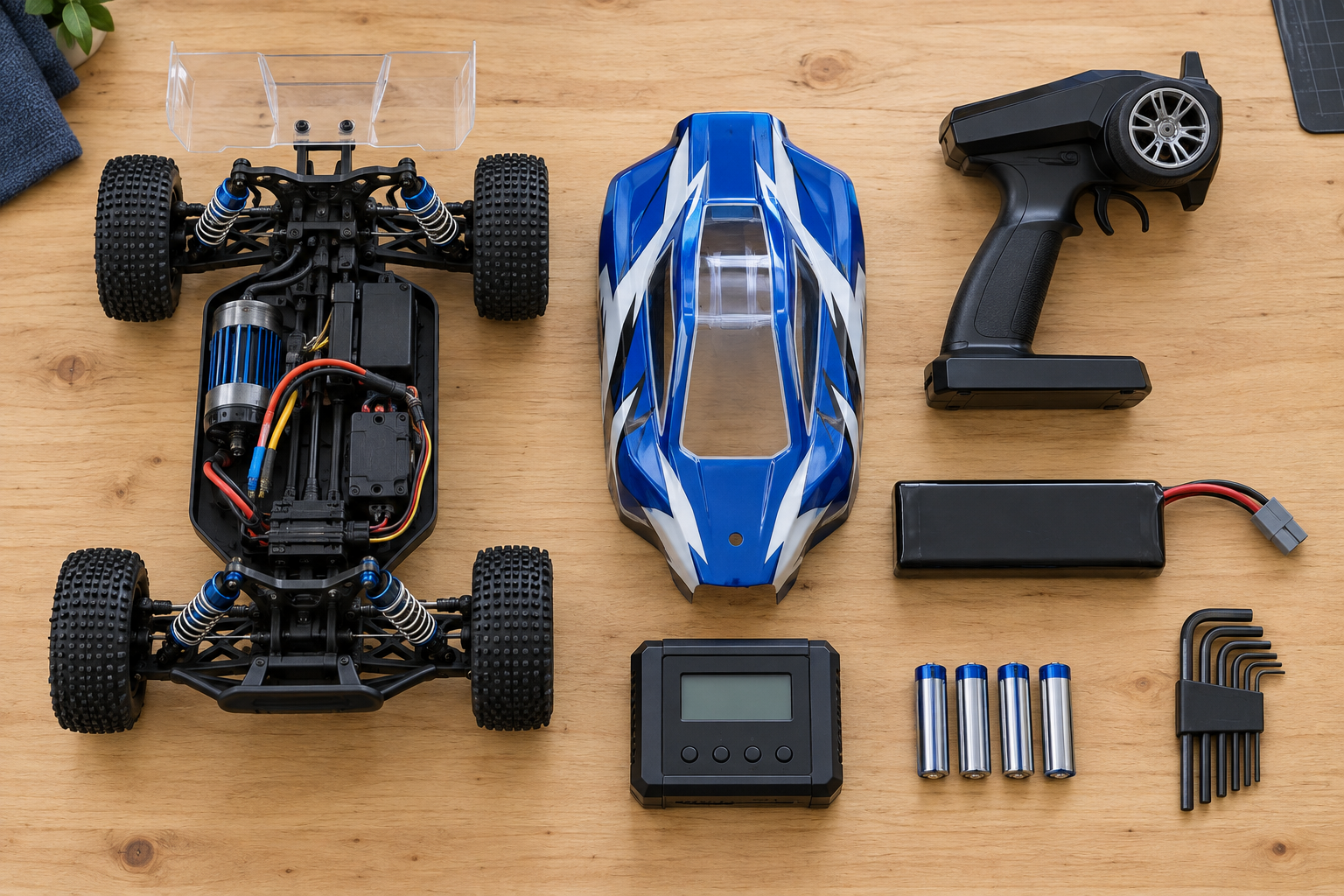
Depending on the package, you may also need:
- A compatible battery
- A suitable charger
- AA or AAA transmitter batteries
- Basic metric hex tools
- A LiPo charging and storage bag
- Spare body clips
- Replacement tyres or commonly used spare parts
Checking the complete requirements before ordering helps avoid receiving your new RC car and discovering that an essential item is missing.
Our Recommendations for Different Beginners
For backyard and general off-road fun, consider a monster truck or stadium truck.
For dirt-track driving and responsive handling, an off-road buggy is a great option.
For sealed surfaces and car parks, choose an on-road touring or rally car.
For trails and slower technical driving, consider a rock crawler.
For indoor driving or limited space, look at a mini or micro RC vehicle.
For the simplest possible starting experience, choose an RTR package that includes the correct battery and charger.
Common Mistakes to Avoid
Choosing Too Much Power
A very fast brushless RC car can be difficult to control. Starting with manageable power will help you learn and reduce the chance of accidents or damage.
Buying for the Wrong Surface
Low on-road cars will struggle on grass, while small vehicles may not cope with rough outdoor terrain. Always match the vehicle to your usual driving area.
Assuming Everything Is Included
“Ready-to-Run” does not always mean the battery and charger are included. Check the package contents carefully.
Purchasing the Wrong Battery
Matching the plug alone is not enough. Battery voltage, physical dimensions and compatibility must all be checked.
Ignoring Spare-Parts Support
RC cars are built to be used, maintained and repaired. A vehicle with good replacement-parts support is normally a better long-term purchase.
Final Beginner’s Checklist
Before choosing your first RC car, ask yourself:
- Where will I drive it?
- How much space do I have?
- Do I want speed, off-road ability or technical crawling?
- What scale is suitable?
- Do I want an RTR model or a kit?
- Is brushed or brushless power appropriate?
- Are the battery and charger included?
- Are replacement parts available?
- What is my complete budget?
Need Help Choosing?
There is no single RC car that is perfect for every beginner. The best model is one that suits your available space, preferred driving style, experience and budget.
Browse our complete range of RC cars and electric RC cars.
If you are still unsure, contact the RC Hobbyland team. Let us know where you plan to drive, your approximate budget and who the vehicle is for, and we can help you choose a suitable model and make sure you have everything required to get started.


